
solder masks play in flex pcb board
Solder mask is an essential component in the pcb manufacturing process, providing a barrier between copper surfaces and the rest of the assembly. Typically, it’s applied as either a dry film or liquid photo-imaged polymer. The type of solder mask used depends on the bend requirements and component density of a given design. For example, a high-density flex circuit may require an adhesive-based or epoxy-free solder mask to reduce the risk of pinholes during bending.
The selection of a solder mask is also dependent upon the underlying surface finish and the assembly process to be employed. Various surface finishes, such as Hot Air Solder Leveling (HASL), Electroless Nickel Immersion Gold (ENIG), and immersion tin (ImSn), are applied to the exposed copper areas of a flex circuit to prevent oxidation and enhance solderability. These surface finishes are compatible with a variety of solder mask materials, and selecting the appropriate one for your project is critical to ensure a successful outcome.
Choosing the correct surface finish and solder mask is also important for improving a flex circuit’s impedance performance and control. For example, a panel-plated copper layer is susceptible to movement during manufacturing, which can increase the impedance between adjacent traces. To combat this issue, flex boards should be designed with a pad-to-copper distance of at least 8 mils. In addition, flex pcb board should be designed to include hatched copper in the expected/designed bended areas of the circuit to provide stronger mechanical performance and help reduce cracking traces.
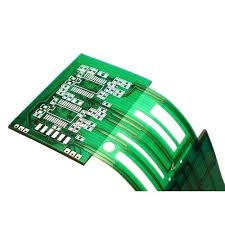
What role do solder masks play in flex pcb board?
Another consideration when choosing a solder mask is its thickness. Thicker solder masks are more durable and flexible, but they’re also more expensive to fabricate. Additionally, thicker masks can increase the likelihood of slivers during etching and inspection, which must be avoided to improve a board’s flexability.
The color of the solder mask is also an important factor to consider, as different colors can create a different color contrast between the traces and components. Many designers prefer green solder mask, as it adheres better to the underlying surface, cures more consistently, and displays the best resolution during inspection. However, some designers prefer red or blue solder mask for aesthetic reasons.
Flexible Printed Circuit Boards (FPCBs) are a type of electronic circuit assembled on a flexible plastic substrate. Unlike traditional rigid PCBs, which are built on inflexible materials such as fiberglass, FPCBs are constructed on materials like polyimide, PEEK (polyether ether ketone), or transparent conductive polyester film. This flexibility offers numerous advantages in terms of design versatility, space-saving, and mechanical endurance.
For a flex circuit, it’s recommended to use a solder mask with a high plasticity. This enables the ink to deform under stress without sagging, and will return to its original thickness when a force is removed. This feature also enables the printed circuit to resist cracking during flexing and vibration. To determine whether a flex board’s solder mask has the necessary plasticity, a test can be conducted wherein a piece of tape with a specific stickiness is stuck to the solder mask and then ripped. If any slivers of the mask are left behind, then the board must be rejected.

